

 AI use in schools has grown faster than almost anyone expected just a few years ago. Classrooms today look a little different, with smart tools helping teachers grade papers and students get extra practice whenever they need it. This shift really picked up speed around 2023, when tools like ChatGPT showed the whole world what AI could actually do. Since then, thousands of schools have started experimenting with these tools in small, practical ways. In this guide, we’ll break down exactly how this technology is showing up in classrooms, and a few things worth knowing before diving in. 📚
🔍 What Does AI Use in Schools Actually Mean?
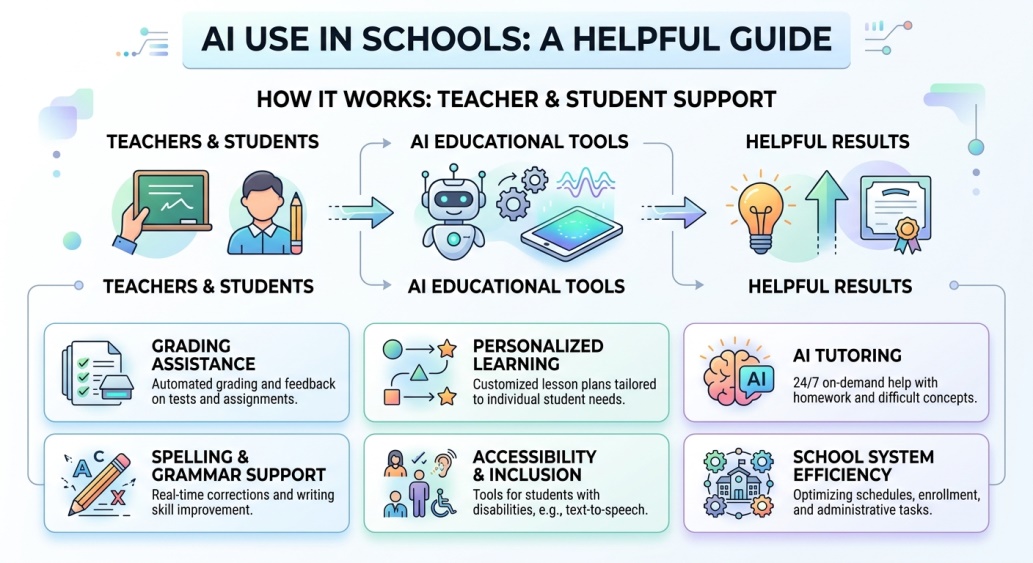 At its core, it just means schools are using smart software to help with teaching and learning tasks. This can be something small, like a tool that checks spelling, or something bigger, like a program that adjusts an entire lesson to fit a student’s pace.
It’s not about robots replacing teachers. It’s more like giving teachers and students a helpful assistant that handles the repetitive stuff, so there’s more time for actual learning.
The range of tools out there is honestly pretty wide too. Some focus purely on grading, others on tutoring, and some quietly work in the background on things like school security or library systems.
📈 Why Is This Trend Growing So Fast?
Teachers are stretched thin, often juggling large classes with very little planning time. AI solutions step in to handle some of that load, freeing up hours every single week.
Students benefit too, since many of these tools are available any time, not just during school hours. That kind of round-the-clock access simply wasn’t possible before.
💡 Quick Tip: Schools that start small, with just one or two tools, usually have an easier time adjusting than schools that try to change everything at once.
🎯 Personalized Learning Tools
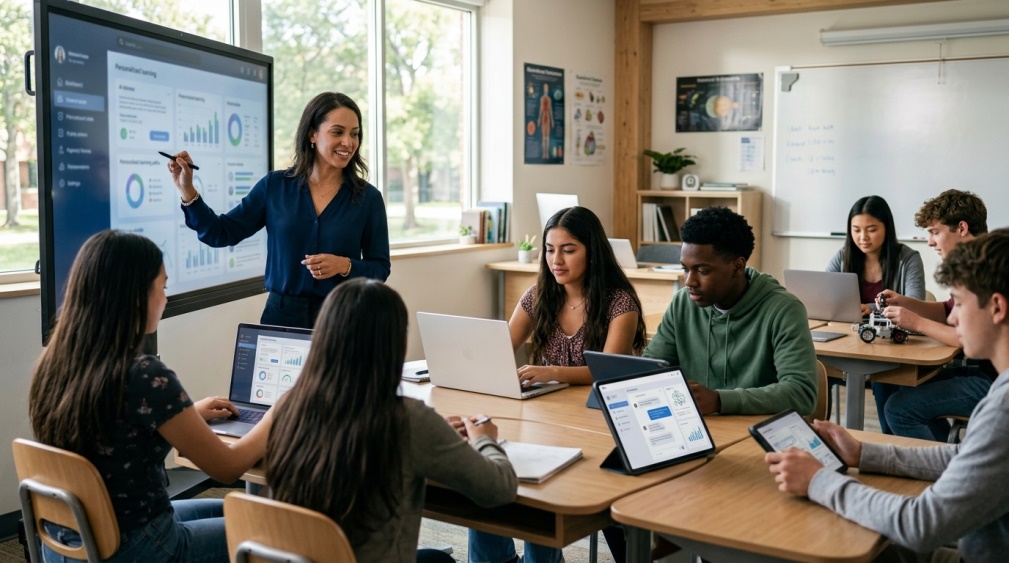
 This is one of the biggest examples of AI in classrooms today. These tools watch how a student is doing and adjust the lesson difficulty automatically, instead of giving everyone the exact same material.
A student who’s struggling gets extra practice on tricky concepts. A student who’s ahead gets pushed a bit further, so nobody feels bored or left behind.
Teachers often say this is the change they notice most, since it’s genuinely hard to give thirty different students thirty different paces of learning without some kind of help.
📝 Grading & Feedback Tools
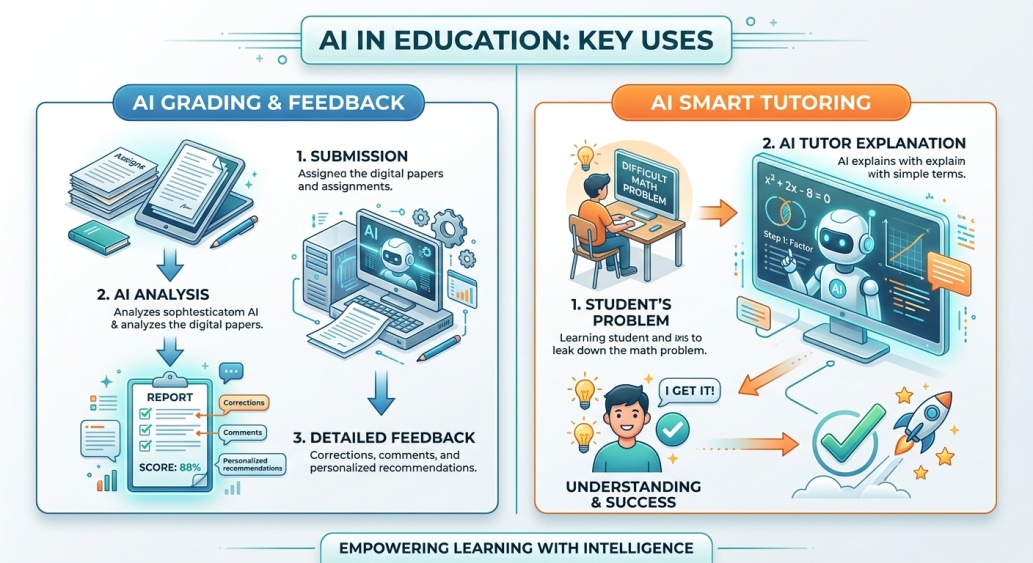 Grading is one of the most time-consuming parts of teaching, and it’s also where AI use in schools has made a real dent. These tools can score multiple-choice tests instantly and even give early feedback on essays.
That doesn’t mean teachers stop checking the work themselves. It just means the first pass happens much faster, leaving more time for meaningful comments.
🧑🏫 Smart Tutoring & Homework Help
Some tools act like a patient tutor that’s available whenever a student gets stuck. They explain a concept a different way if the first explanation didn’t click.
This is especially useful for subjects like math, where a student might need to see a problem solved three or four different ways before it finally makes sense.
🎮 Classroom Engagement Tools
Smart whiteboards and interactive apps are quietly bringing AI software into everyday lessons. Some can recognize handwriting or adjust what’s displayed based on how the class is responding.
Gamified learning apps also fall into this group. Turning a lesson into a game keeps students motivated, and many of these tools use AI to adjust difficulty as students play.
Younger students especially respond well to this format, since a game-like structure keeps their attention far longer than a traditional worksheet ever could.
🗣️ Accessibility Tools
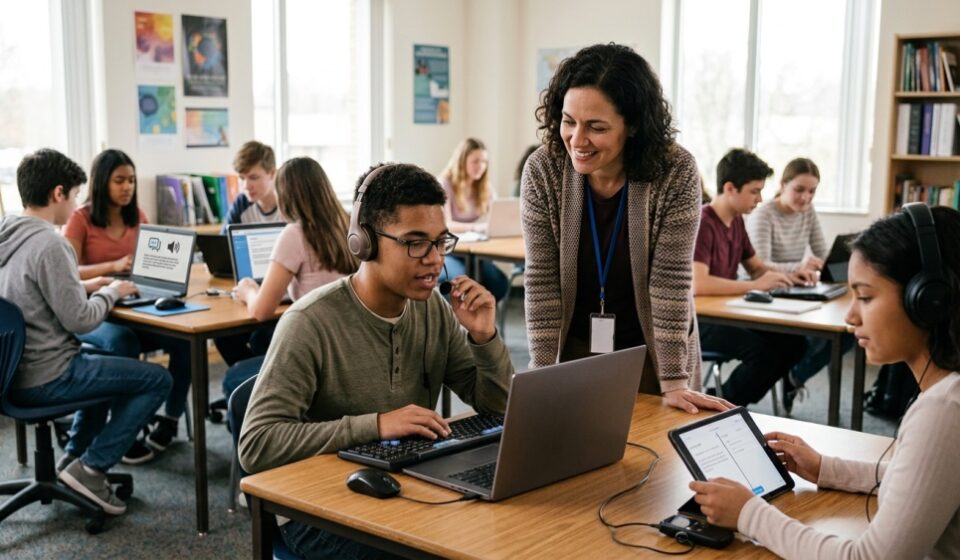
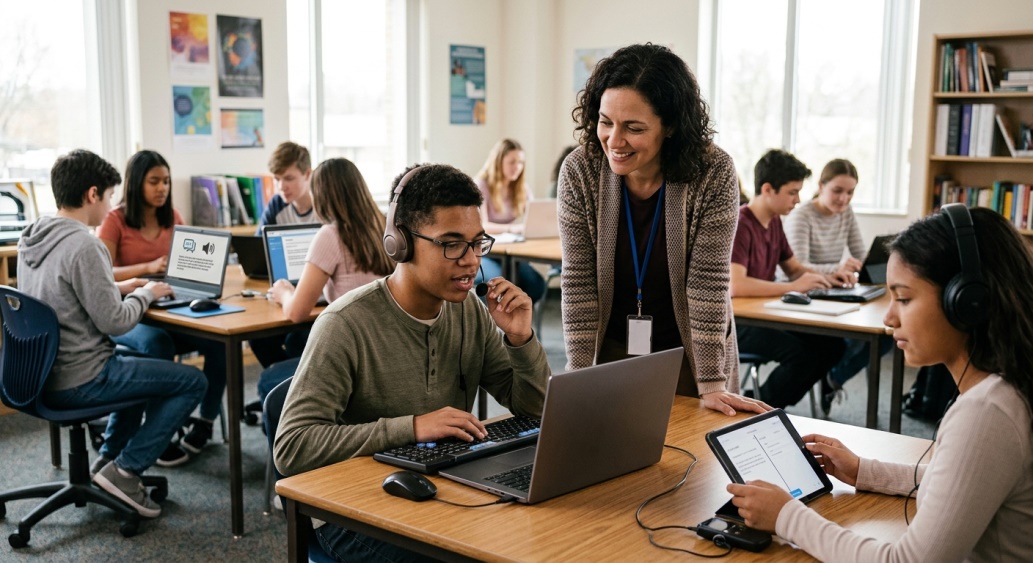 This is one of the most meaningful uses of AI software in education. Speech-to-text tools help students who struggle with writing, while text-to-speech helps students who find reading difficult.
Translation tools are a huge help too, especially in classrooms with students who speak different languages at home. These tools quietly remove barriers that used to make learning much harder for some kids.
For students with dyslexia or other learning differences, this category often makes the biggest day-to-day difference of any tool on this list. It’s less flashy than a fancy tutoring app, but it genuinely changes how a student experiences a normal school day.
🔐 School Safety & Security
Beyond the classroom, AI is showing up in school security systems too. Some cameras use AI to spot unusual activity and alert staff faster than a person watching a screen ever could.
This is a smaller but growing part of how schools use this technology, mostly working quietly in the background to help keep campuses safer.
📊 Data Insights for Teachers and Schools
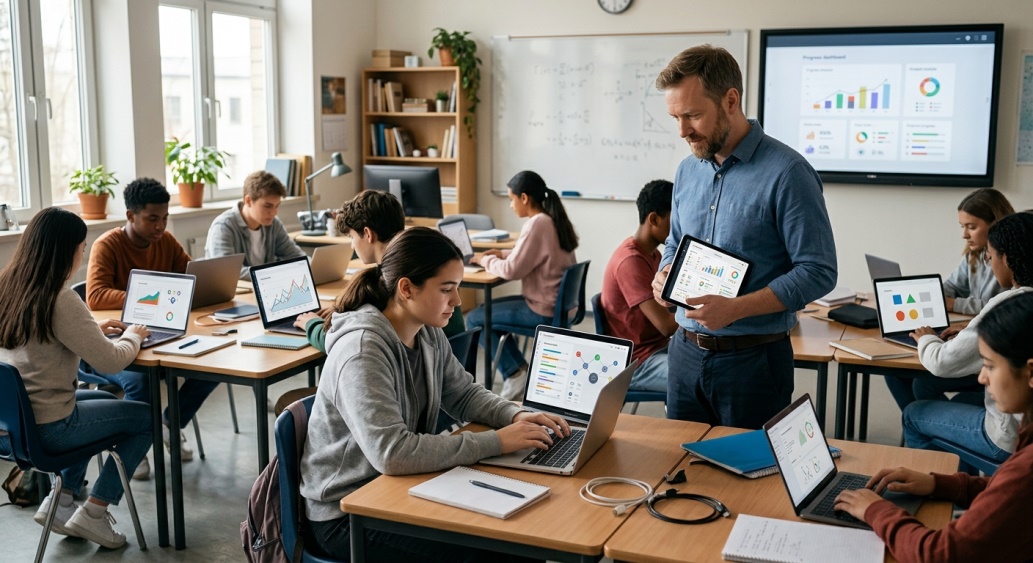
AI tools can look at test scores and assignment patterns to flag students who might be falling behind before it becomes a bigger problem. This kind of early warning system used to require hours of manual review. 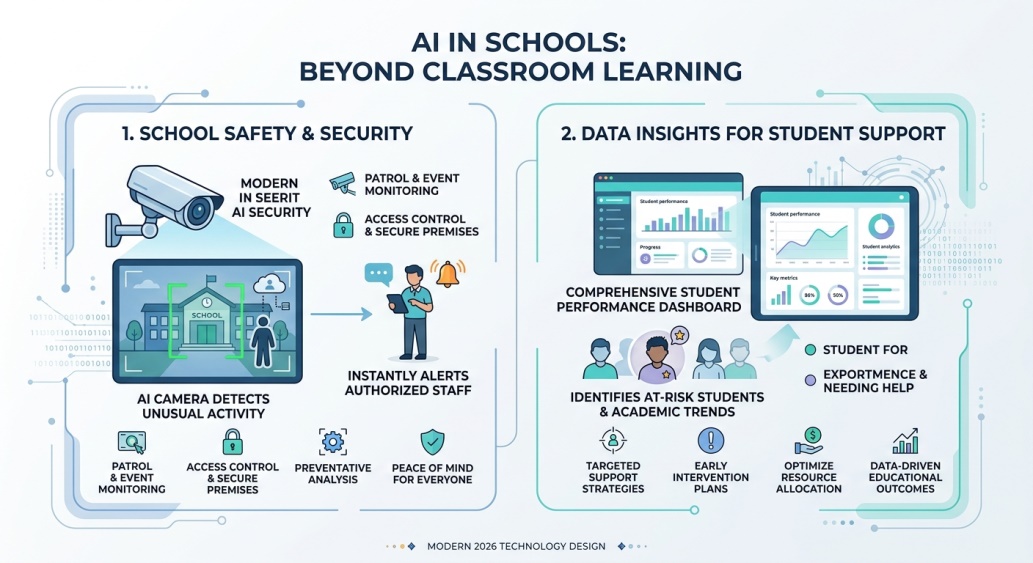
Administrators also use these insights to plan resources better, like figuring out where extra tutoring support is needed most across a school or district.
This kind of visibility used to depend heavily on a teacher’s memory and gut feeling. Having real data behind these decisions helps schools act sooner, rather than waiting until a struggling student is already far behind.
✨ Benefits of AI Use in Schools
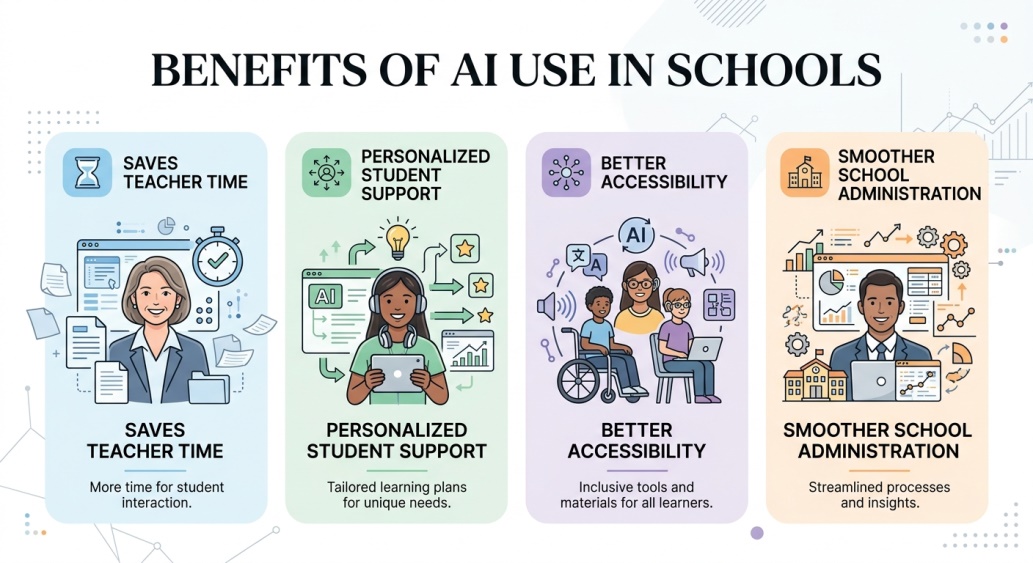 Time savings top the list, especially for teachers buried in grading and paperwork. Getting even a few hours back each week makes a real difference.
Students gain more personalized support too, without needing a one-on-one tutor for every subject. And for students with learning differences, these tools often make school genuinely more accessible.
Schools also report a smoother workflow overall, since less time gets lost on repetitive administrative work that used to eat into actual teaching time.
🔒 How to Use AI Safely in Schools
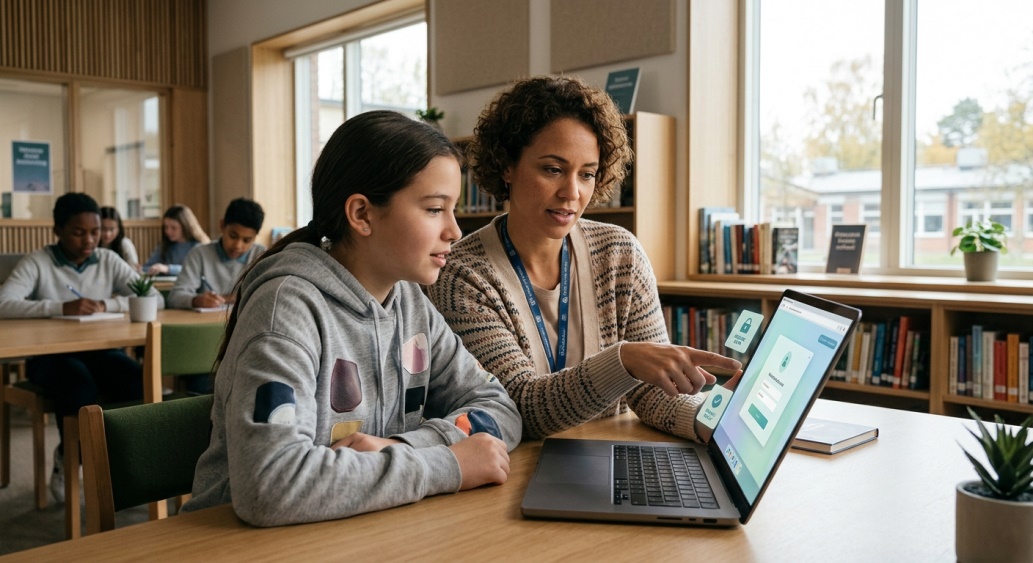 Privacy matters a lot here, since these tools often handle student data. Schools should only use tools that clearly explain how student information is stored and protected.
Teachers and parents should also talk openly with students about relying on AI responsibly, rather than letting it do all the thinking for them. A tool works best as support, not a replacement for actual learning.
👥 Who Benefits Most From This Technology?
Teachers benefit through saved time and less administrative stress. Students benefit through personalized support that adapts to how they actually learn.
Parents benefit indirectly too, since kids who get timely help tend to feel less frustrated with schoolwork. Even school administrators benefit, using data insights to make smarter decisions about where support is needed.
📌 Tips for Introducing AI in a Classroom
Start with one clear problem you want to solve, like grading time or reading support, rather than trying every tool at once. This makes it much easier to measure if something is actually helping.
Involve students in the process too. Kids tend to adapt to new tools quickly, and their feedback often points out issues adults might miss entirely.
⚠️ Common Challenges to Watch For
Over-reliance is a real concern, especially if students start skipping the actual thinking part of an assignment. Balance matters more than the tool itself here.
Another challenge is uneven access. Not every student has the same device or internet access at home, so schools need a plan for students who can’t use these tools outside the classroom.
Cost and training add another layer too. Even a free tool takes time for teachers to learn properly, and rushing that step usually leads to frustration rather than actual time savings.
❓ FAQs
Is AI use in schools replacing teachers?
No, these tools are built to support teachers with repetitive tasks, not to take over the actual teaching and mentoring role.
Is it safe for students to use AI tools for schoolwork?
It’s generally safe when schools choose well-known tools with clear privacy policies and set clear rules around responsible use.
Do all schools currently use AI tools?
Not yet, though the number of schools experimenting with at least one AI-powered tool has grown significantly in recent years.
Can AI tools help students with learning difficulties?
Yes, tools like speech-to-text and personalized learning platforms are especially helpful for students who need extra support.
Will AI use in schools keep growing in the coming years?
It’s very likely, since more schools are testing these tools and reporting genuine time savings and better student engagement.
How can parents stay involved if schools start using AI tools?
Parents can ask teachers which tools are being used and have open conversations at home about using AI responsibly for homework.
Are these tools expensive for schools to adopt?
Many tools offer free or low-cost plans for education, making it easier for schools with smaller budgets to get started.
🎓 Conclusion
AI use in schools is no longer some far-off idea. It’s already showing up in grading, tutoring, accessibility, and even school safety, all working quietly to support both teachers and students.
The schools getting the most out of this technology tend to start small, stay thoughtful about privacy, and keep the human side of teaching front and center. That balance is really what makes the whole thing work. 🌟
Meta Title: AI Use in Schools: A Simple Guide for Teachers, Students & Parents (2026)
Meta Description: Discover how AI use in schools is changing classrooms today, from grading help to personalized learning, plus safety tips every school should know.
🏫 AI Use in Schools: A Simple Guide for 2026
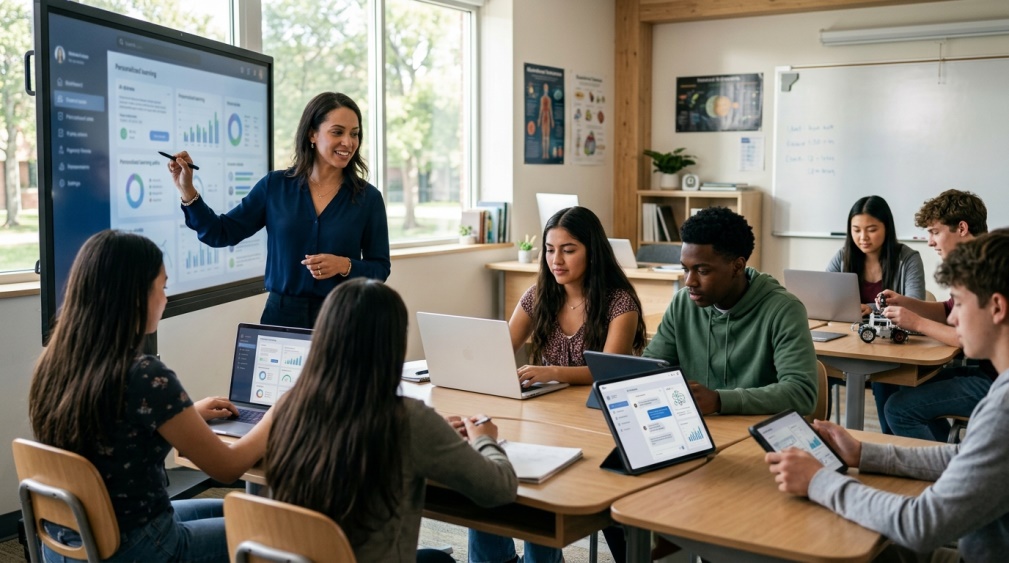 AI use in schools has grown faster than almost anyone expected just a few years ago. Classrooms today look a little different, with smart tools helping teachers grade papers and students get extra practice whenever they need it. This shift really picked up speed around 2023, when tools like ChatGPT showed the whole world what AI could actually do. Since then, thousands of schools have started experimenting with these tools in small, practical ways. In this guide, we’ll break down exactly how this technology is showing up in classrooms, and a few things worth knowing before diving in. 📚
🔍 What Does AI Use in Schools Actually Mean?
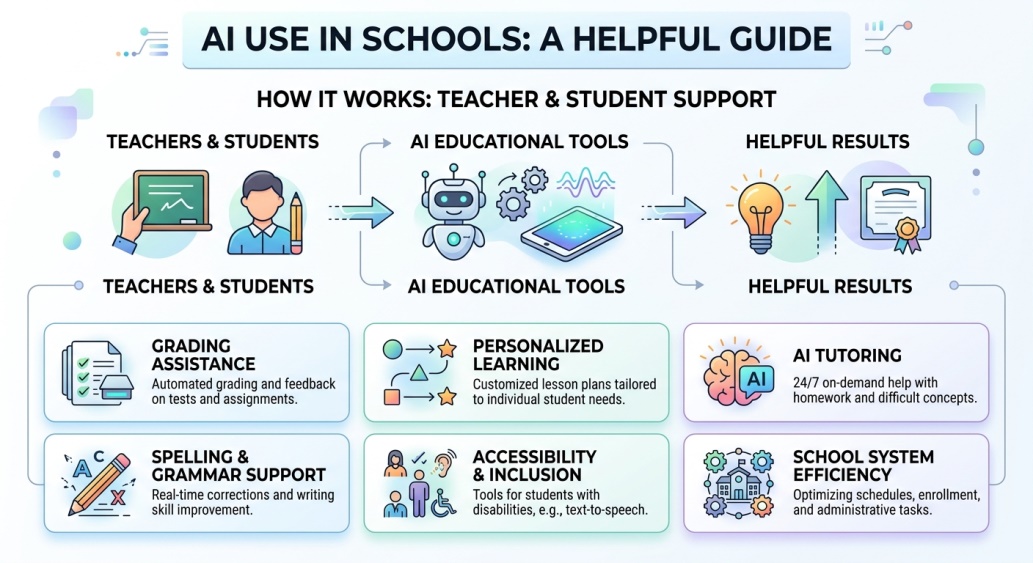 At its core, it just means schools are using smart software to help with teaching and learning tasks. This can be something small, like a tool that checks spelling, or something bigger, like a program that adjusts an entire lesson to fit a student’s pace.
It’s not about robots replacing teachers. It’s more like giving teachers and students a helpful assistant that handles the repetitive stuff, so there’s more time for actual learning.
The range of tools out there is honestly pretty wide too. Some focus purely on grading, others on tutoring, and some quietly work in the background on things like school security or library systems.
📈 Why Is This Trend Growing So Fast?
Teachers are stretched thin, often juggling large classes with very little planning time. AI solutions step in to handle some of that load, freeing up hours every single week.
Students benefit too, since many of these tools are available any time, not just during school hours. That kind of round-the-clock access simply wasn’t possible before.
💡 Quick Tip: Schools that start small, with just one or two tools, usually have an easier time adjusting than schools that try to change everything at once.
🎯 Personalized Learning Tools
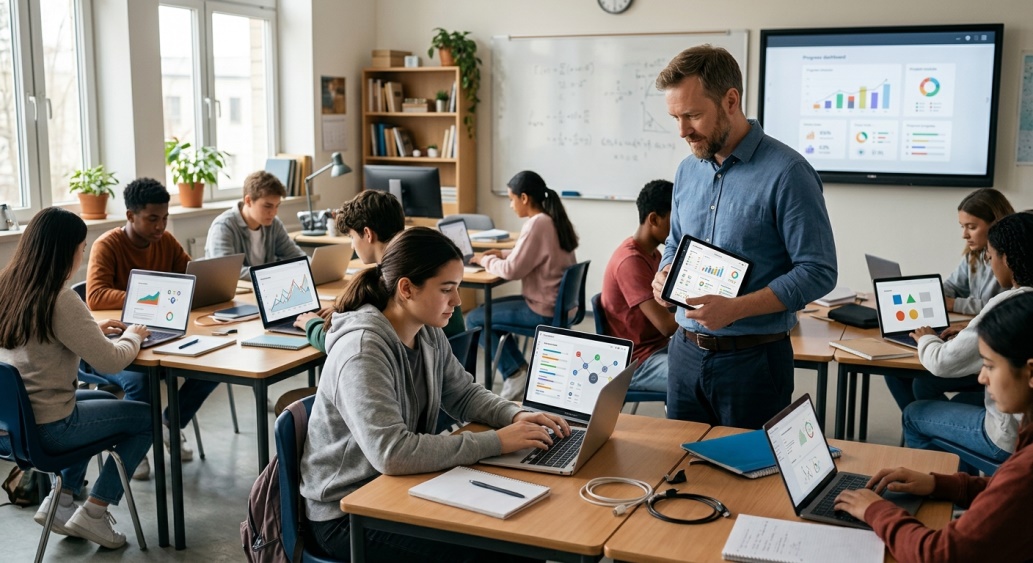 This is one of the biggest examples of AI in classrooms today. These tools watch how a student is doing and adjust the lesson difficulty automatically, instead of giving everyone the exact same material.
A student who’s struggling gets extra practice on tricky concepts. A student who’s ahead gets pushed a bit further, so nobody feels bored or left behind.
Teachers often say this is the change they notice most, since it’s genuinely hard to give thirty different students thirty different paces of learning without some kind of help.
📝 Grading & Feedback Tools
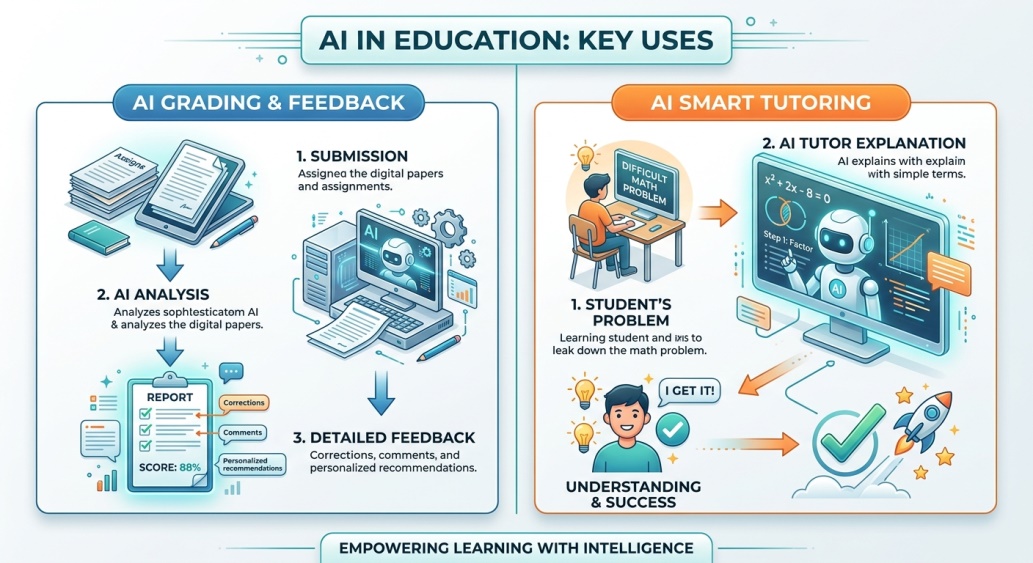 Grading is one of the most time-consuming parts of teaching, and it’s also where AI use in schools has made a real dent. These tools can score multiple-choice tests instantly and even give early feedback on essays.
That doesn’t mean teachers stop checking the work themselves. It just means the first pass happens much faster, leaving more time for meaningful comments.
🧑🏫 Smart Tutoring & Homework Help
Some tools act like a patient tutor that’s available whenever a student gets stuck. They explain a concept a different way if the first explanation didn’t click.
This is especially useful for subjects like math, where a student might need to see a problem solved three or four different ways before it finally makes sense.
🎮 Classroom Engagement Tools
Smart whiteboards and interactive apps are quietly bringing AI software into everyday lessons. Some can recognize handwriting or adjust what’s displayed based on how the class is responding.
Gamified learning apps also fall into this group. Turning a lesson into a game keeps students motivated, and many of these tools use AI to adjust difficulty as students play.
Younger students especially respond well to this format, since a game-like structure keeps their attention far longer than a traditional worksheet ever could.
🗣️ Accessibility Tools
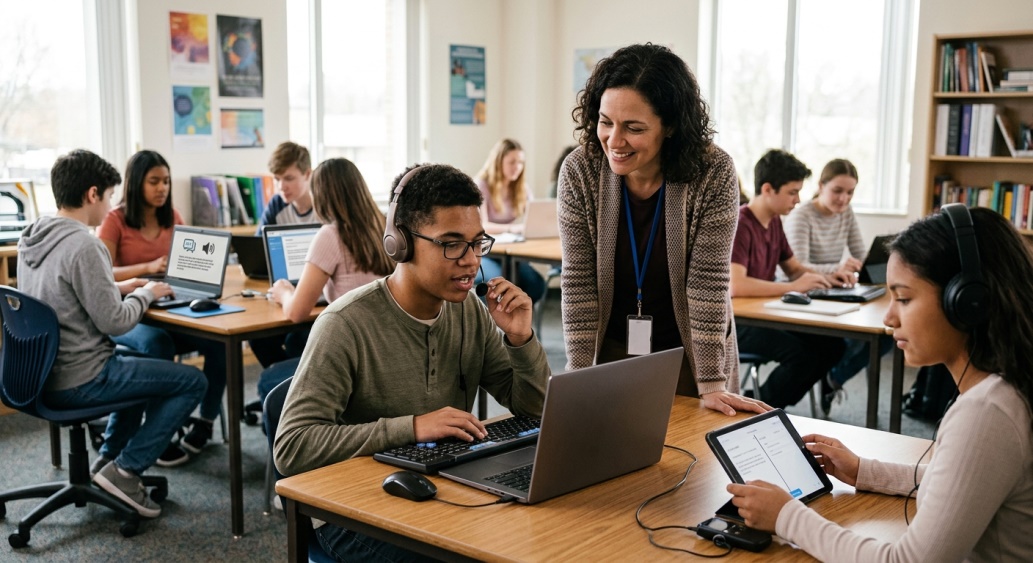 This is one of the most meaningful uses of AI software in education. Speech-to-text tools help students who struggle with writing, while text-to-speech helps students who find reading difficult.
Translation tools are a huge help too, especially in classrooms with students who speak different languages at home. These tools quietly remove barriers that used to make learning much harder for some kids.
For students with dyslexia or other learning differences, this category often makes the biggest day-to-day difference of any tool on this list. It’s less flashy than a fancy tutoring app, but it genuinely changes how a student experiences a normal school day.
🔐 School Safety & Security
Beyond the classroom, AI is showing up in school security systems too. Some cameras use AI to spot unusual activity and alert staff faster than a person watching a screen ever could.
This is a smaller but growing part of how schools use this technology, mostly working quietly in the background to help keep campuses safer.
📊 Data Insights for Teachers and Schools
AI tools can look at test scores and assignment patterns to flag students who might be falling behind before it becomes a bigger problem. This kind of early warning system used to require hours of manual review.
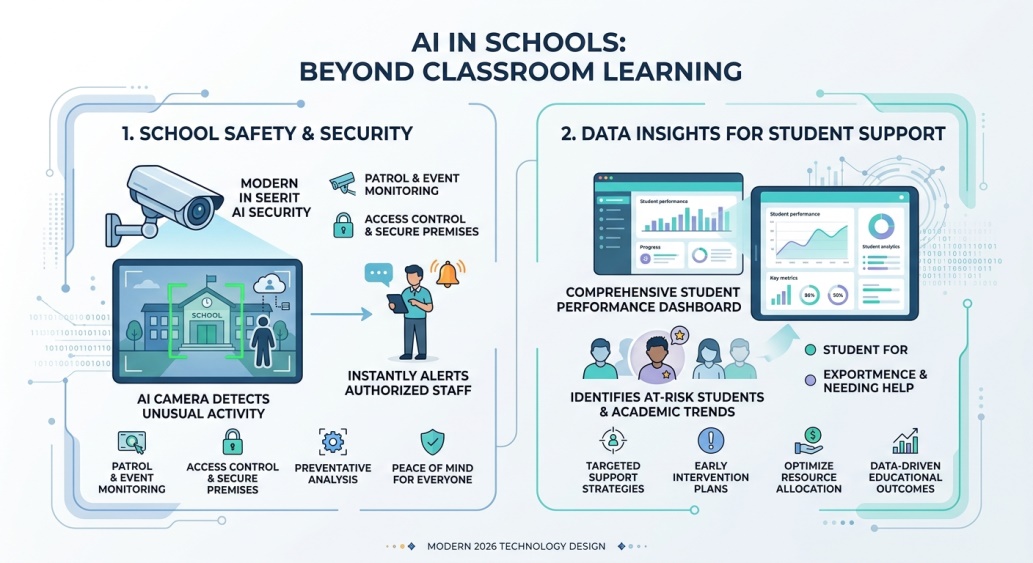
Administrators also use these insights to plan resources better, like figuring out where extra tutoring support is needed most across a school or district.
This kind of visibility used to depend heavily on a teacher’s memory and gut feeling. Having real data behind these decisions helps schools act sooner, rather than waiting until a struggling student is already far behind.
✨ Benefits of AI Use in Schools
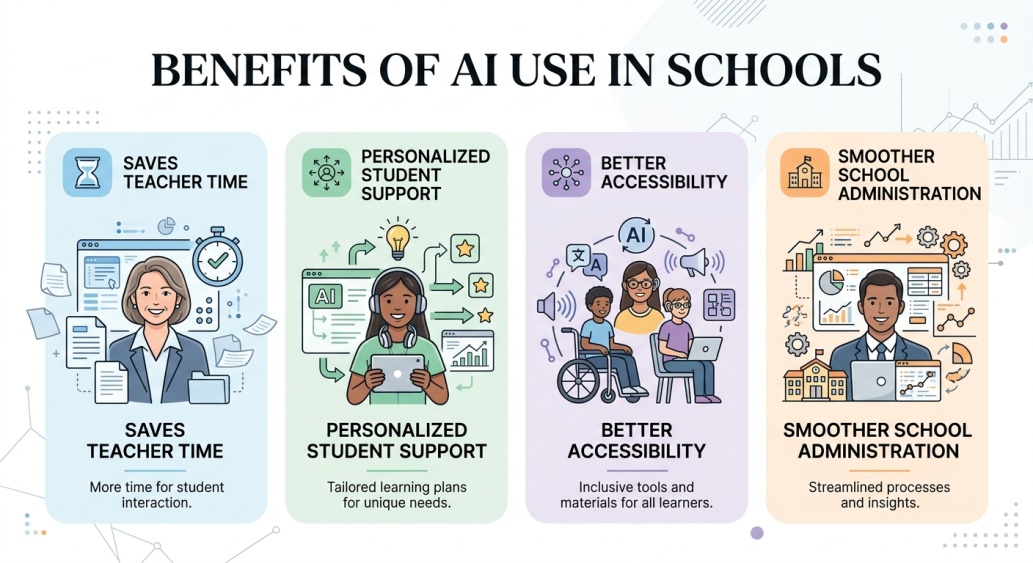 Time savings top the list, especially for teachers buried in grading and paperwork. Getting even a few hours back each week makes a real difference.
Students gain more personalized support too, without needing a one-on-one tutor for every subject. And for students with learning differences, these tools often make school genuinely more accessible.
Schools also report a smoother workflow overall, since less time gets lost on repetitive administrative work that used to eat into actual teaching time.
🔒 How to Use AI Safely in Schools
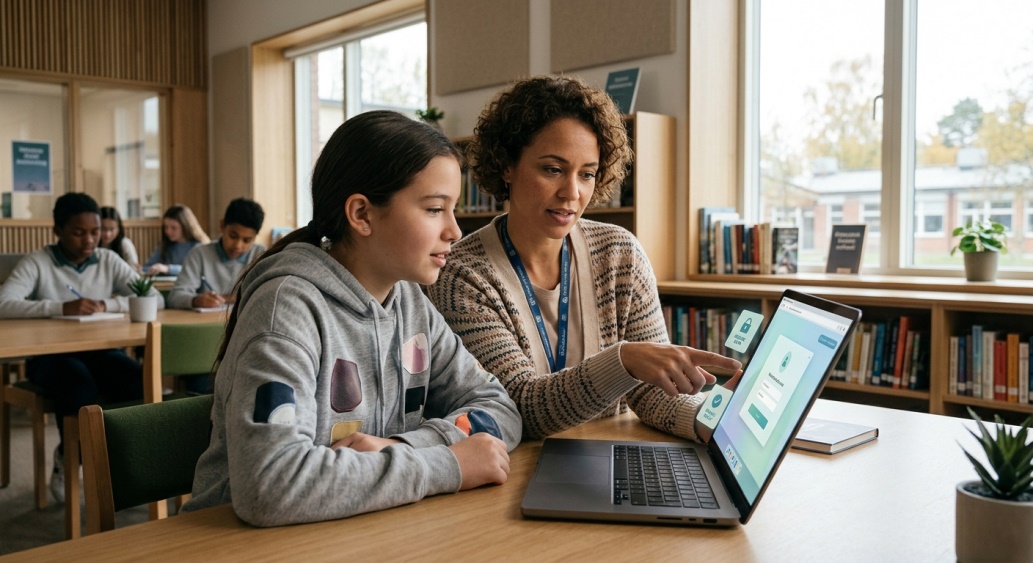 Privacy matters a lot here, since these tools often handle student data. Schools should only use tools that clearly explain how student information is stored and protected.
Teachers and parents should also talk openly with students about relying on AI responsibly, rather than letting it do all the thinking for them. A tool works best as support, not a replacement for actual learning.
👥 Who Benefits Most From This Technology?
Teachers benefit through saved time and less administrative stress. Students benefit through personalized support that adapts to how they actually learn.
Parents benefit indirectly too, since kids who get timely help tend to feel less frustrated with schoolwork. Even school administrators benefit, using data insights to make smarter decisions about where support is needed.
📌 Tips for Introducing AI in a Classroom
Start with one clear problem you want to solve, like grading time or reading support, rather than trying every tool at once. This makes it much easier to measure if something is actually helping.
Involve students in the process too. Kids tend to adapt to new tools quickly, and their feedback often points out issues adults might miss entirely.
⚠️ Common Challenges to Watch For
Over-reliance is a real concern, especially if students start skipping the actual thinking part of an assignment. Balance matters more than the tool itself here.
Another challenge is uneven access. Not every student has the same device or internet access at home, so schools need a plan for students who can’t use these tools outside the classroom.
Cost and training add another layer too. Even a free tool takes time for teachers to learn properly, and rushing that step usually leads to frustration rather than actual time savings.
❓ FAQs
Is AI use in schools replacing teachers?
No, these tools are built to support teachers with repetitive tasks, not to take over the actual teaching and mentoring role.
Is it safe for students to use AI tools for schoolwork?
It’s generally safe when schools choose well-known tools with clear privacy policies and set clear rules around responsible use.
Do all schools currently use AI tools?
Not yet, though the number of schools experimenting with at least one AI-powered tool has grown significantly in recent years.
Can AI tools help students with learning difficulties?
Yes, tools like speech-to-text and personalized learning platforms are especially helpful for students who need extra support.
Will AI use in schools keep growing in the coming years?
It’s very likely, since more schools are testing these tools and reporting genuine time savings and better student engagement.
How can parents stay involved if schools start using AI tools?
Parents can ask teachers which tools are being used and have open conversations at home about using AI responsibly for homework.
Are these tools expensive for schools to adopt?
Many tools offer free or low-cost plans for education, making it easier for schools with smaller budgets to get started.
🎓 Conclusion
AI use in schools is no longer some far-off idea. It’s already showing up in grading, tutoring, accessibility, and even school safety, all working quietly to support both teachers and students.
The schools getting the most out of this technology tend to start small, stay thoughtful about privacy, and keep the human side of teaching front and center. That balance is really what makes the whole thing work. 🌟